Can you power every city?
- Creating an effective interaction process between a tangible tabletop, its physical objects that can be placed on to the table (tokens) and the user when at least 20 tokens are available
- Unclear instructions can make it difficult for users to understand how to interact with such a relatively novel type of installation
- In a museum setting users prefer not to spend too much time on interactive installations
- Having the ability to interact with a large number of tokens can be overwhelming
- 5 months
- Master's thesis for my double degree programme M.Sc. Human Computer Interaction and Design in collaboration with 100%FAT B.V.
- User Research (ATLAS.ti)
- Low-Fidelity Prototyping (Procreate)
- Animations (LottieFiles)
- Digital High-Fidelity Prototyping (Figma and ProtoPie)
- Physical High-Fidelity Prototyping (Autodesk Fusion)
- User Testing
- Documenting (Thesis)


This interactive installation was developed in collaboration with 100%FAT B.V. as my Master's thesis for my double degree programme M.Sc. Human Computer Interaction and Design. 100%FAT is an interactive installations company based in Enschede, the Netherlands, focusing on projects that combine art and technology in creative ways. While working on this thesis, 100%FAT supported with valuable feedback, provided technical resources and offered participants for research methods.
While a Tangible User Interface (TUI) is a Post-WIMP approach featuring physical objects (tokens) that act as an interface and serve as input and output devices, a Tangible Tabletop is a digital, table-sized (touch)screen usually using a small number of tokens.
100%FAT wanted to know whether a tangible tabletop interaction with a large number of tokens is feasible and, if yes, how this interaction would have to be designed, as this could provide them with a USP.

As they often design installations for museums, they chose this setting for this project and decided to base the underlying game simulation on the topic of the energy grid.
The technical feasibility of the project was not part of this thesis, putting the focus on the interaction design and user experience of the installation by highlighting the factors of:
- Usability
- Engagement
- Learning
The concept created should therefore clearly communicate how and when to use the tokens, bringing joy to users and motivating them to learn more about the energy grid while teaching them the basics. To achieve this, I applied the Design Thinking and Co-Design framework.
In the first phase of the Design Thinking cycle, I applied user research methods to empathise with the problem, the user and their needs. I used the following methods: (1) Literature Review, (2) Stakeholder Interviews in combination with a Co-Design Activity, and (3) Competitive Analysis.
Literature Review
During the literature review, I looked at books, articles, dissertations, conference proceedings, and other available resources to get an understanding of the designing for and prototyping of tangible tabletops, as well as related and important interaction design principles. It also informed on how to measure the different variables of usability, engagement and learning for an effective evaluation.
The findings of the literature review were collected, grouped and analysed using Miro.
Stakeholder Interviews with Co-Design Activity
I combined stakeholder interviews with a co-design activity to get a better understanding of the users' needs and expectations regarding the installation. While I conducted the interviews solely for my own research, I collaborated for the co-design activity with a fellow thesis student who focused on the technical implementation of the tangible tabletop for their thesis.
Based on the developed Actors Map (see below), two main categories of stakeholders got invited to these one-by-one sessions: Users and experts. The users were represented by the target group of museum visitors, while the expert interviews were conducted with experts from the fields of game design and/or physical and digital installation building and/or with a museum background.
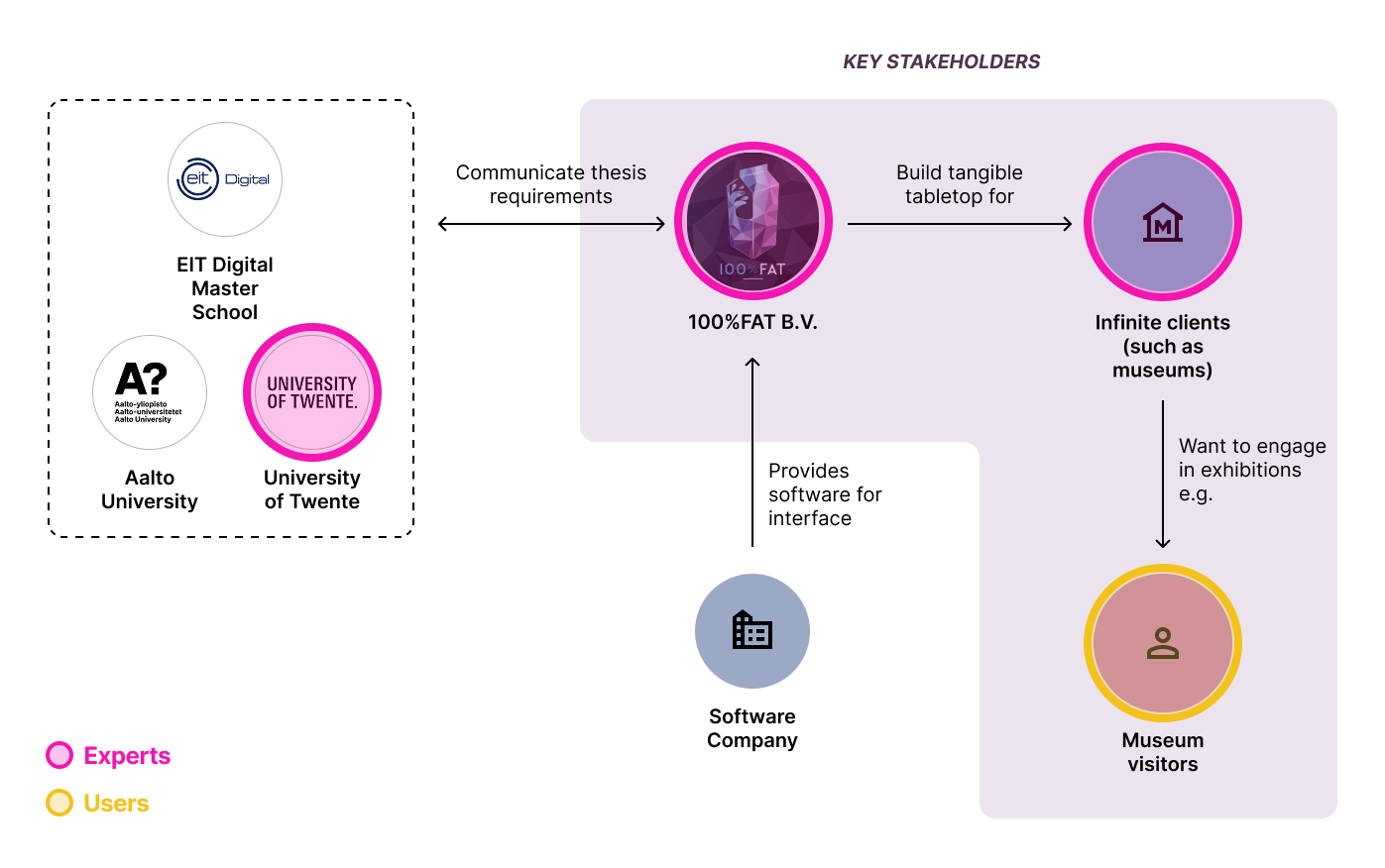
To recruit both types of participants, we used convenience sampling. To identify suitable end users, a verbal screener needed to be passed, while the recruited experts were either from the case company 100%FAT, the University of Twente, or from a museum with which the case company had links. In total, we conducted 6 sessions with experts and 5 with users, all of which in person.
During the sessions, I collected qualitative data through notes, observations, photographs, and voice- and video-recordings. To analyse it, I first familiarised myself with the data before organising it by question. The created documents were then imported into Atlas.ti and coded with preset and emergent categories, before importing the findings into Miro and interpreting them for the analysis.
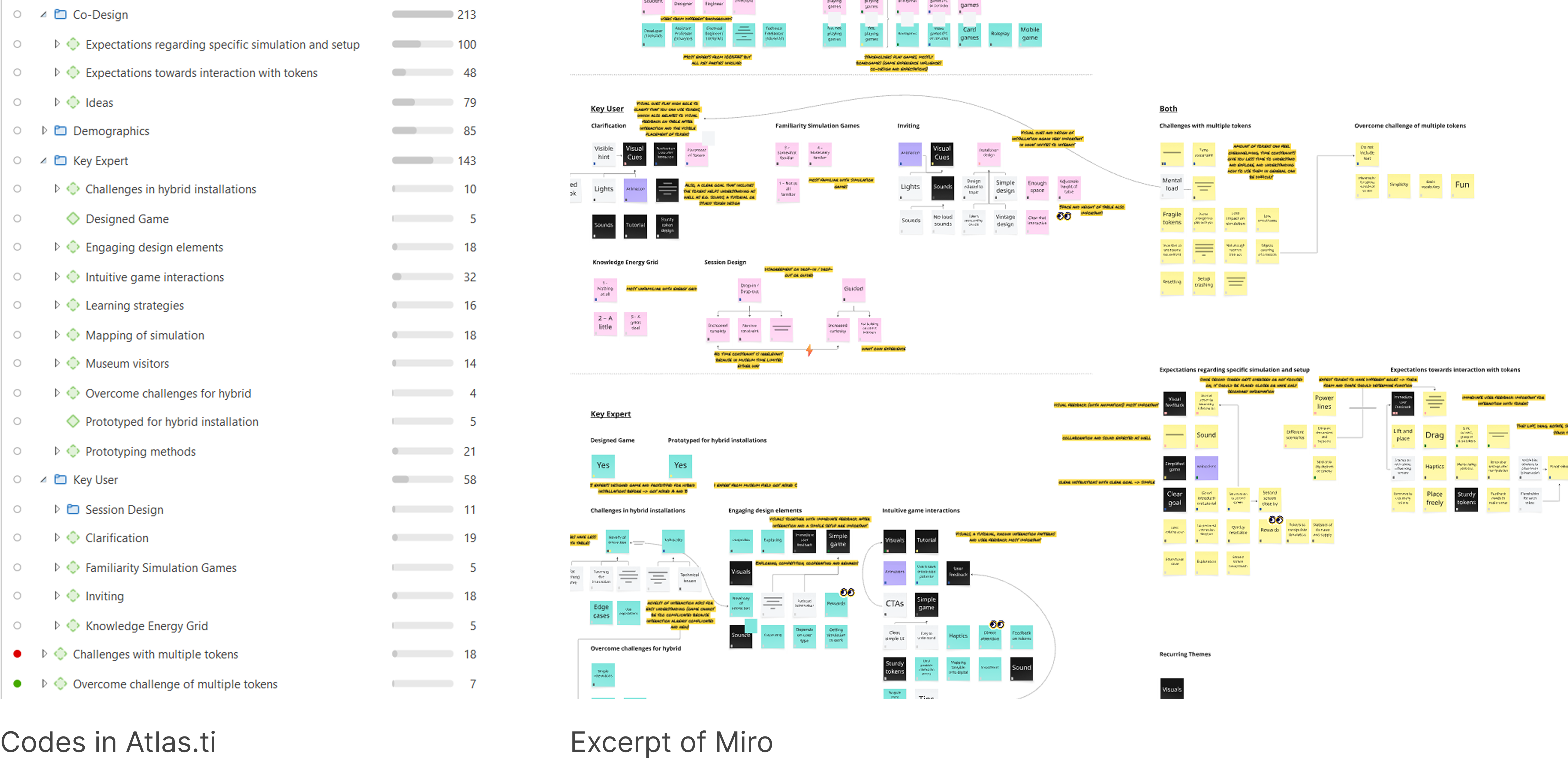 Click image to enlarge
Stakeholder Interviews
For both types of participants, I created a guideline which covered an introduction, demographic questions, a set of key questions specific to the participant’s role, a summary and a wrap-up.
For the users, the main goal with the interview was to understand their familiarity with tangible or interactive tabletops and their expectations towards the setup and use. For the experts on the other hand, the main goal was to learn from their area of expertise regarding creating games that encourage usability, engagement, and learning, prototyping for digital and physical installations, and what makes a successful museum installation.
Co-Design Activity
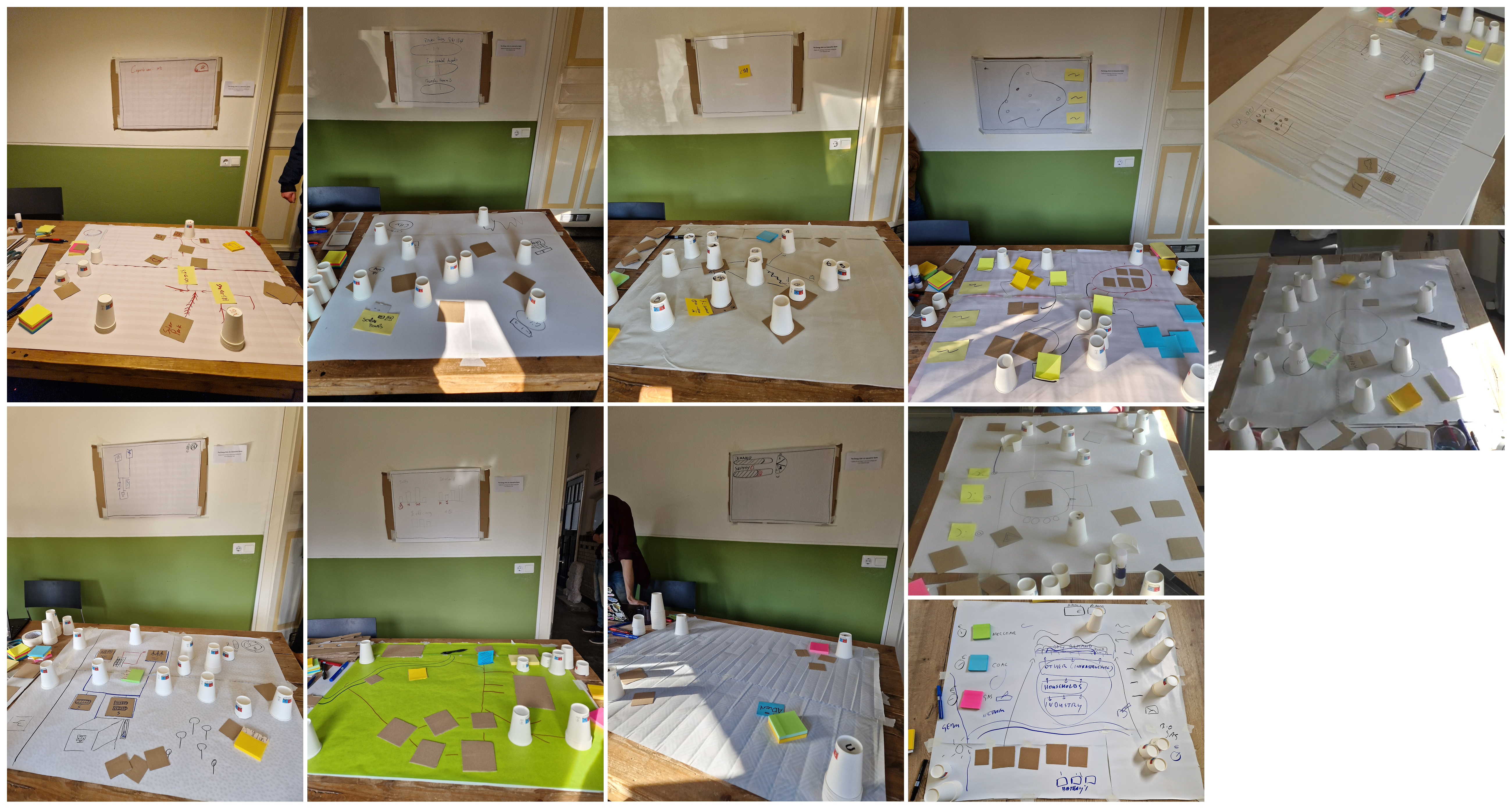
The stakeholder interviews got combined with a bodystorming and rough prototyping Co-Design session. The goal of this activity was to actively involve the stakeholders in the design process by roleplaying and drafting themselves, and to get a better understanding of their expectations towards the interaction with multiple available tokens on a tangible tabletop.
The setup of this activity included simulating the screen of the tangible tabletop through paper on a table and offering representations of tokens such as paper cups alongside prototyping tools such as pens and scissors. On the wall, a second screen was simulated through paper as well.
The participants were instructed to try to use 20 tokens and to think out loud. They were also given background information about the energy grid and the scenario about being in a museum exhibition about the Dutch energy grid. They were asked to show what they notice, what makes them want to interact with such an installation and what they expect to happen.
All created tables can be seen here:
Findings
Analysing all the literature research and the stakeholder interviews with the co-design activity led to the following findings.
Design Considerations
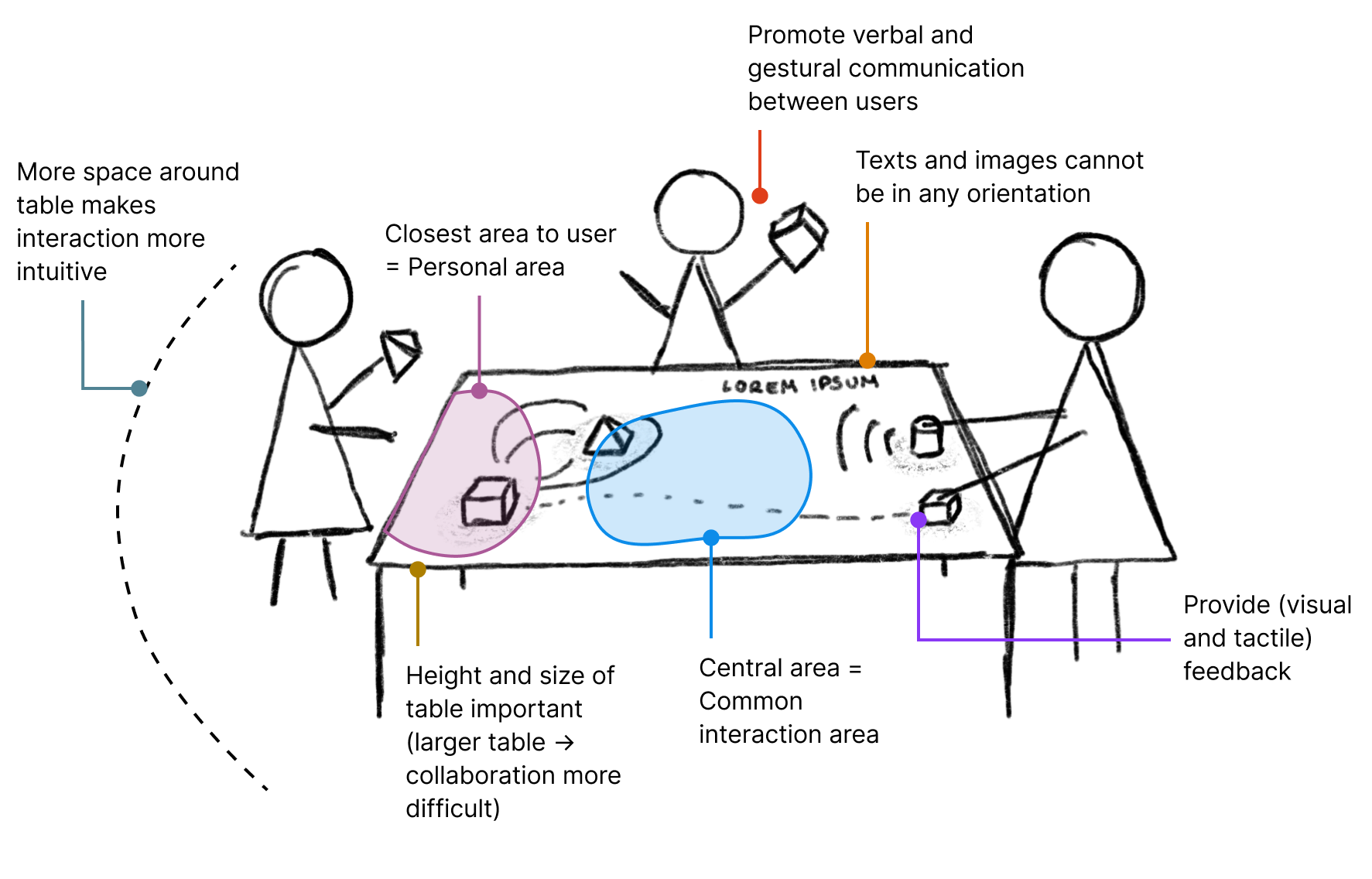
Some of the already known design considerations towards tangible tabletops include e.g. that the installation should support walk up and use, bimanual interaction of using both hands at the same time can be allowed to improve performance, and the token's shape should support the user in grabbing the token.
More other general design considerations are summarised in the following figure.
Challenges with Multiple Tokens and Expectations towards the Interaction
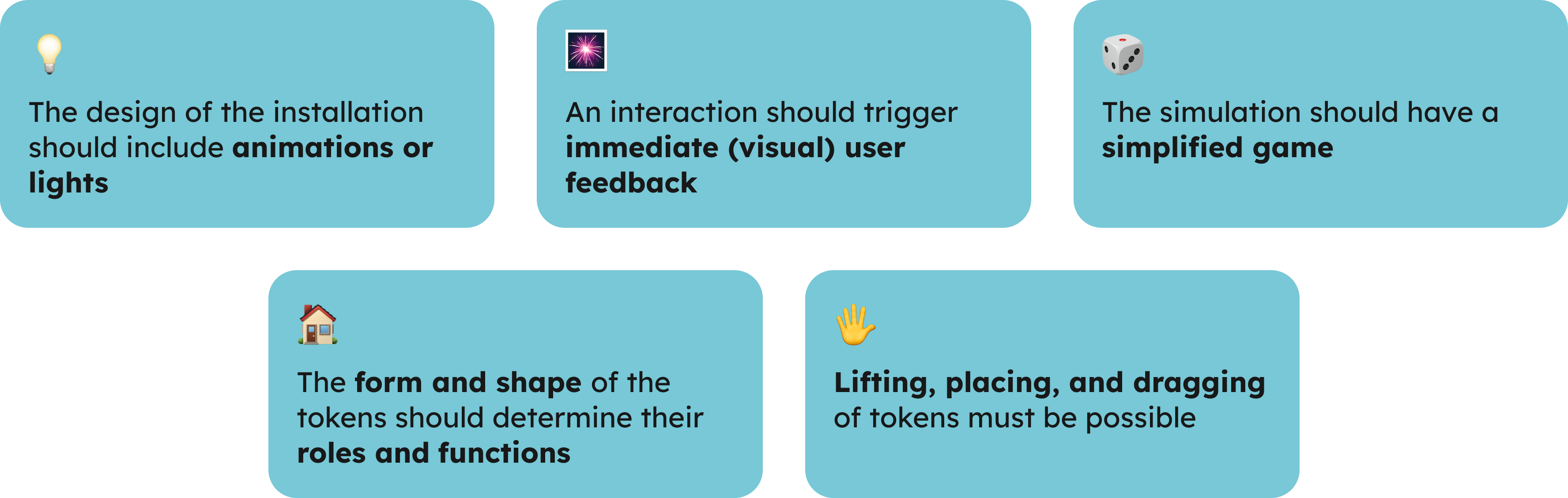
Combined with the stakeholders' point of views, the challenges with multiple tokens are mainly:

While the expectations on the interaction with multiple tokens are:
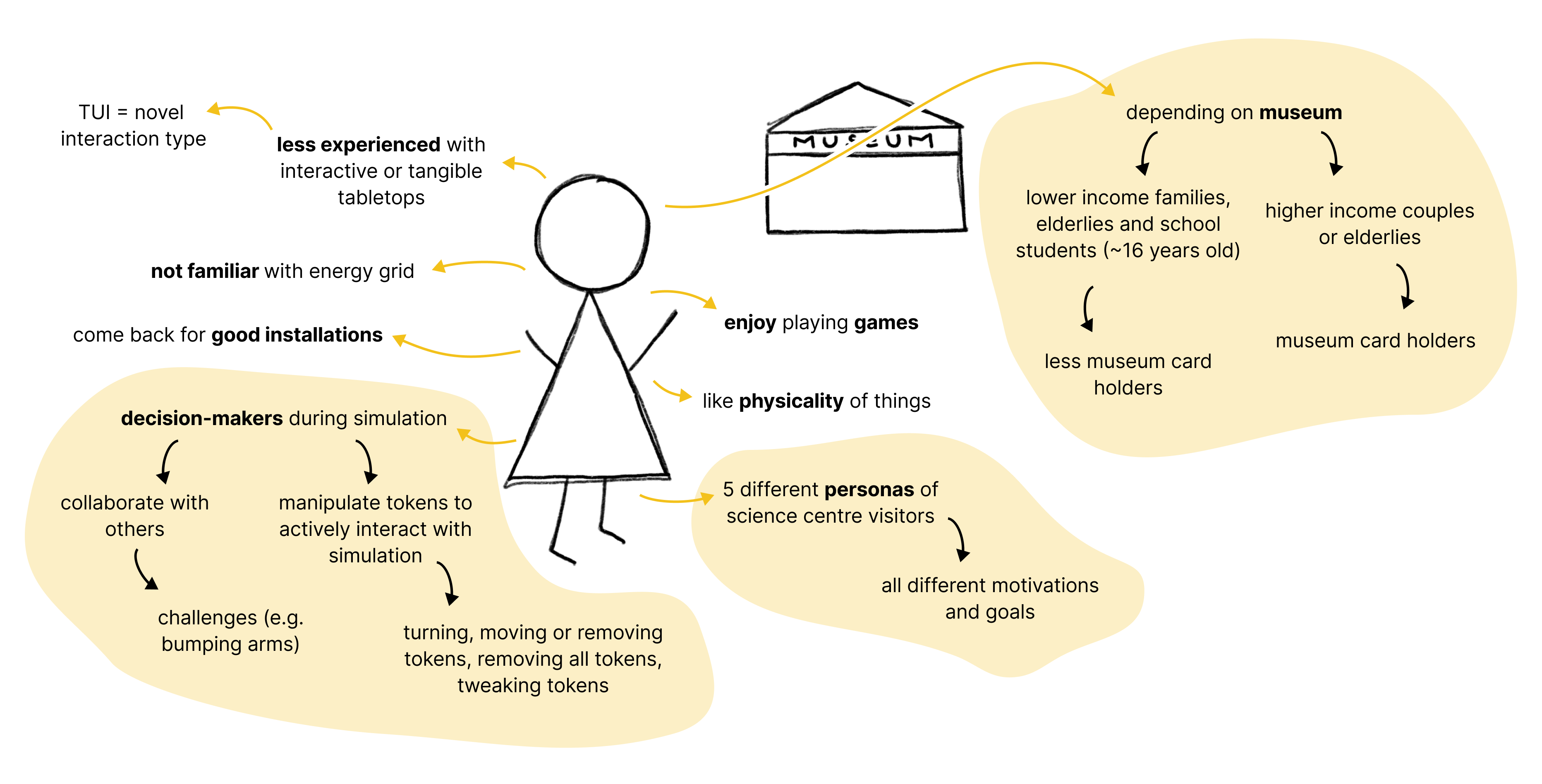
Target Group Characteristics and Behaviours
The target group of museum visitors includes specific characteristics and behaviours that should be considered in the design process.
Designing for Usability, Engagement, and Learning
For designing an intuitive experience, some of the design guidelines and interaction principles important for this type of interaction are ‘Visibility of System Status’ (Nielsen’s 10 Usability Heuristics for User Interface Design) ‘Affordance’ (Norman’s Principles of Interaction Design) and ‘Learnability’ (Tog’s Principles).
To design for engagment, mainly motivation and reward should be addressed by creating a feeling of competition and achievement but also incorporating accomplishments and progression. Collaboration can also support this together with a simple and understandable game setup.
For reaching a learning effect, the installation should support trial and error and direct the user's attention to the most important elements.
Competitive Analysis
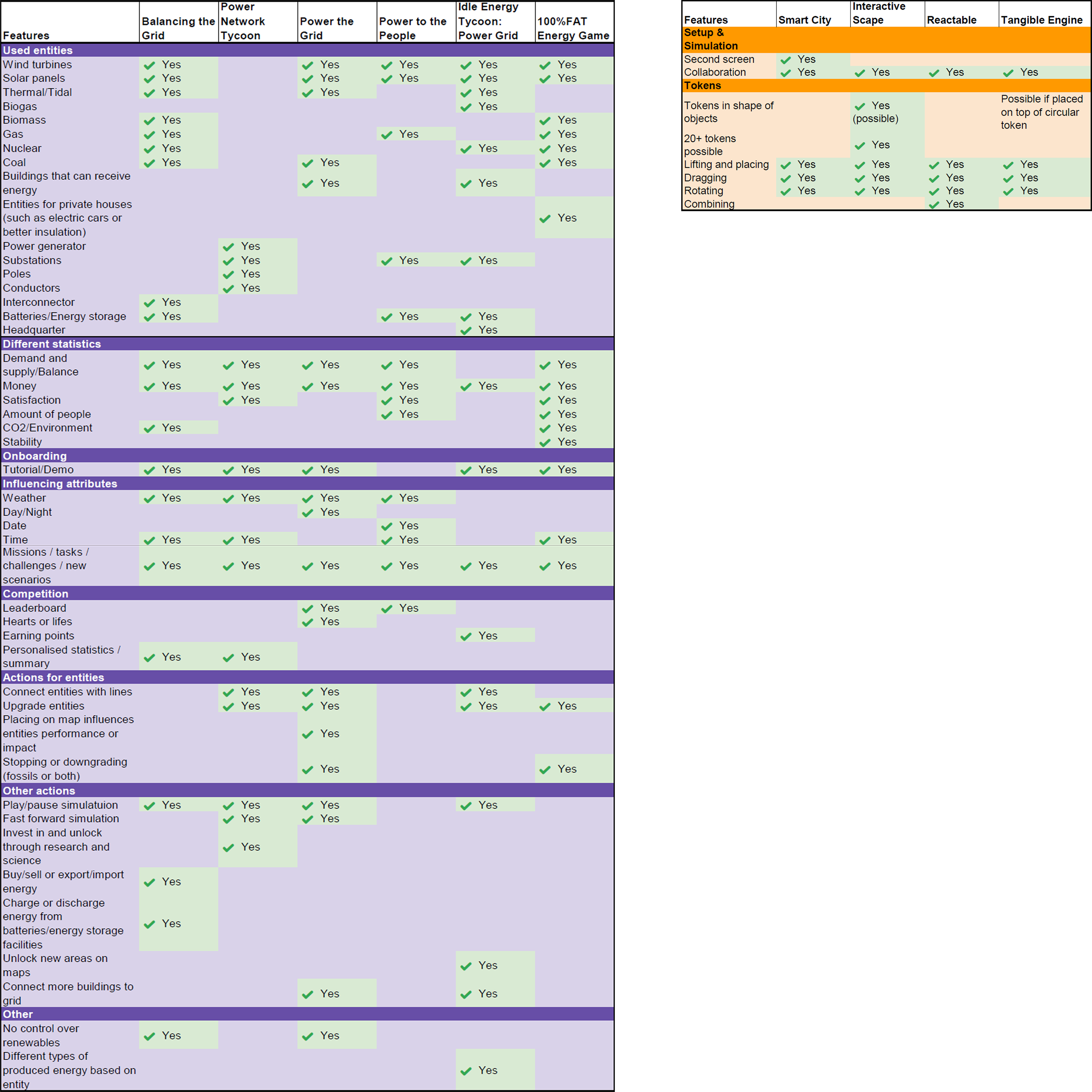
To get a deeper understanding about the user expectations and how the current market designs and develops games about the energy grid and/or in general for tangible tabletops, two feature comparison matrices were created. This was mainly used to identify possible design choices for the simulation (content feature comparison matrix on the left) and the interaction (interaction feature comparison matrix on the right).
 Click image to enlarge
During this stage in the design thinking process, the collected insights from the empathise stage were used to define the target group and user requirements.
Target Group Definition
For defining the target group, a primary and negative persona were created.
The chosen primary persona (Tanja Tangible) is supposed to satisfy all other personas with a design targeted to their needs. Most importantly, Tanja has three main goals:
- Having fun playing with physical objects, the simulation and with her family
- Feeling drawn in by the scenario of reaching a specific goal
- Feeling in control because she easily understands how to manipulate the simulation and assess its impact
The negative persona (Peter Professional) on the other hand has a lot of knowledge about the energy grid and has also already tested and seen multiple interactive and tangible tabletops.
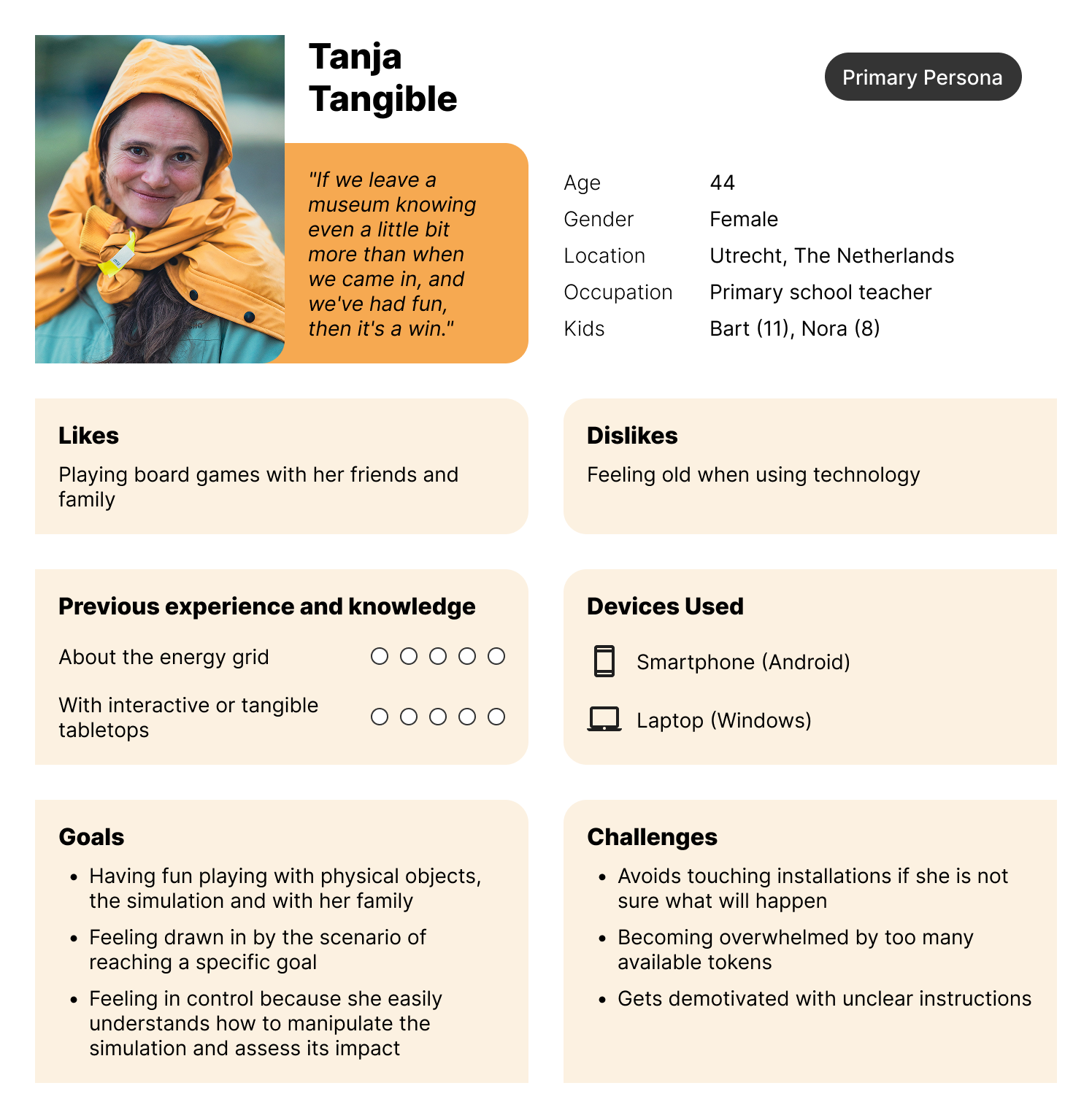
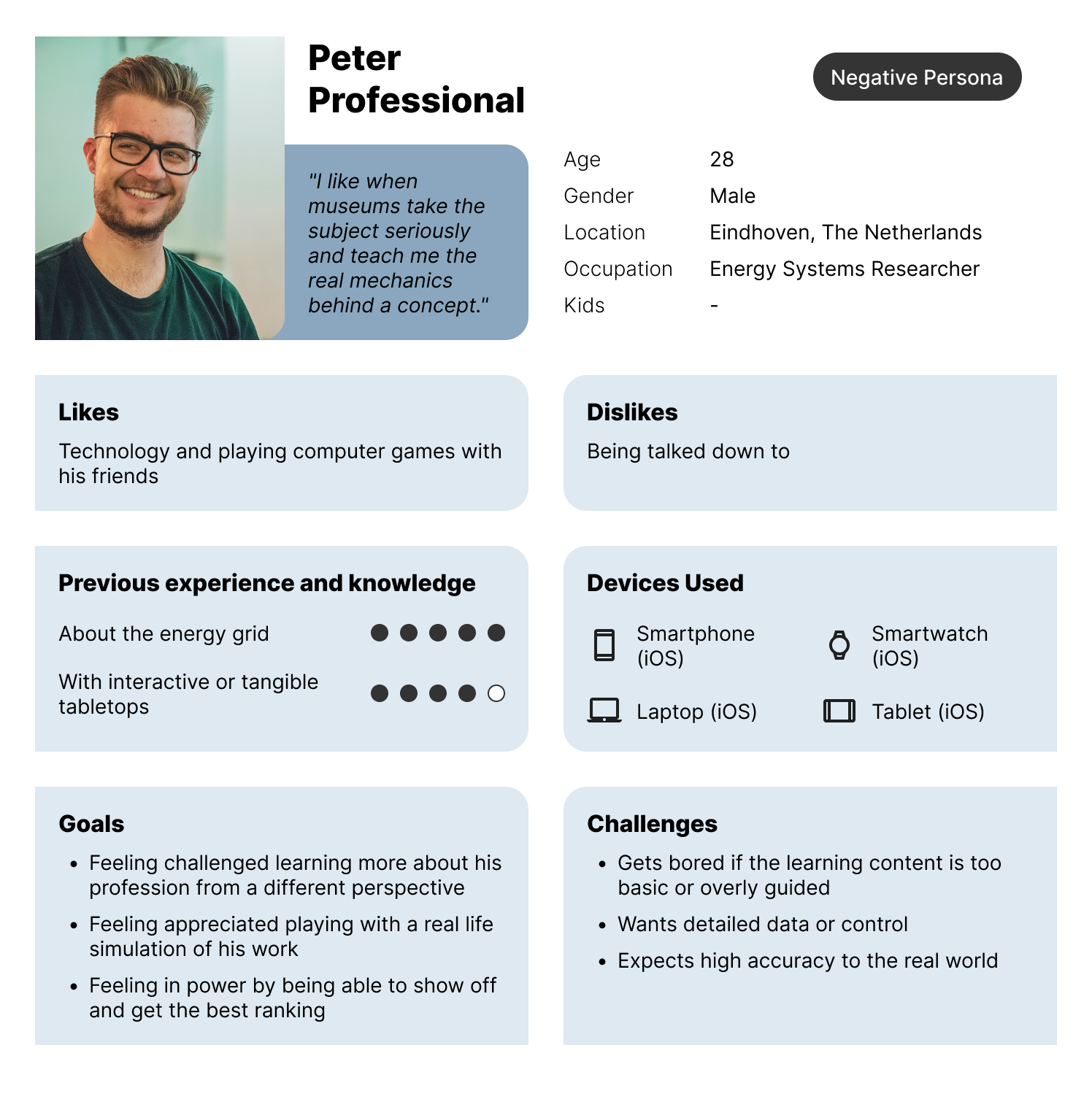
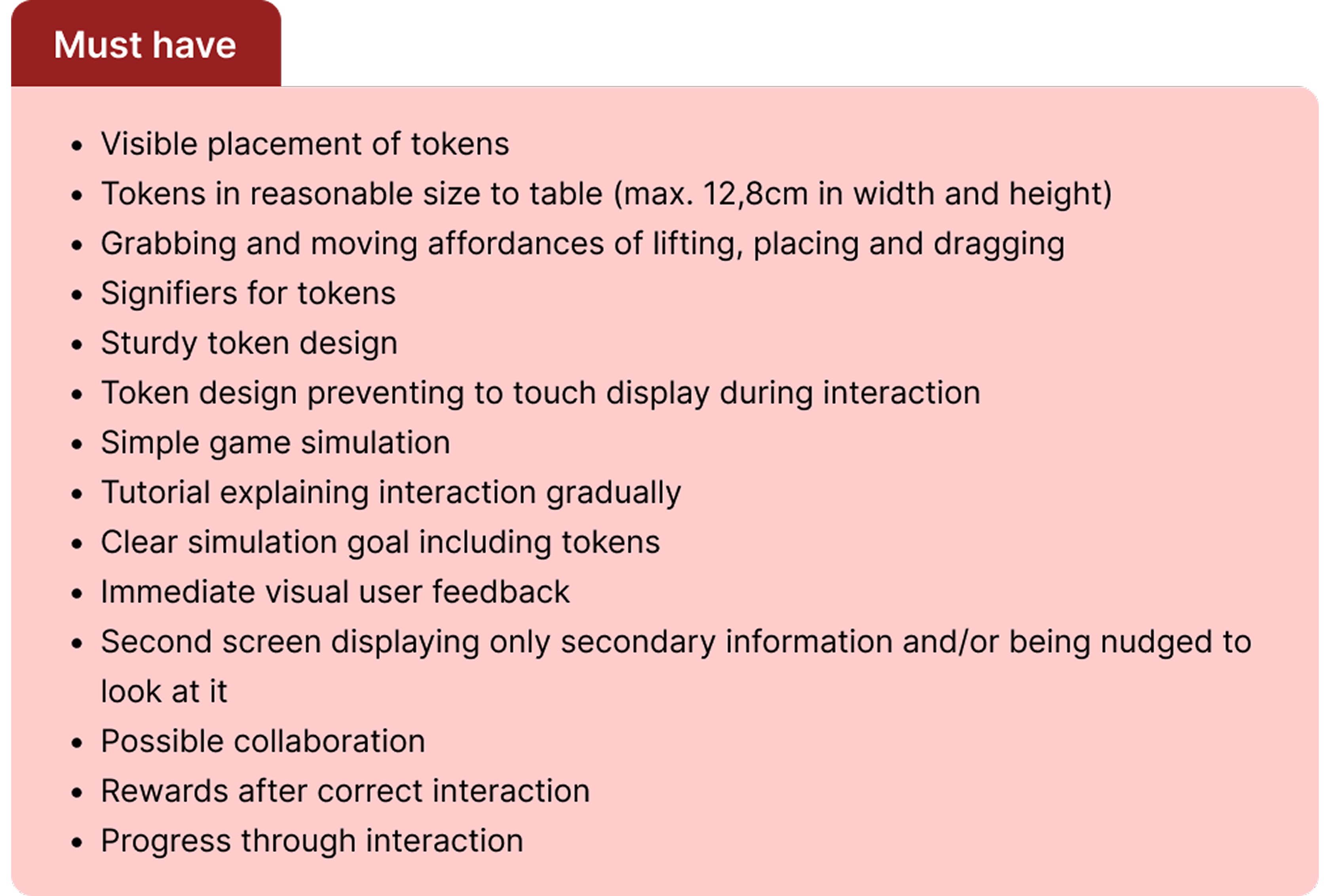
With the help of a MoSCoW Analysis, the user requirements were prioritised and grouped into the following categories: (1) Must haves, (2) Should haves, (3) Could haves, and (4) Will not haves. This was done based on the empathising stage and the primary persona’s goals.
The most important requirements are the Must Haves, which are essential for the product to be successful:
In the ideation phase, the aim was to utilise all previous knowledge and ideate as many different creative design solutions for the identified user requiremnts.
Bodystorming & Rough Prototyping
During the stakeholder Co-Design sessions, the techniques of bodystorming and rough prototyping were used. While the stakeholders communicated their expectations, they also ideated on possible simulation games.
Common design choices were among others:
- Visible power lines that can be connected to energy consuming buildings or just the grid itself
- Placement of tokens affecting the simulation
- Different scenarios that provide incentives for the player to complete a mission
- Different energy demanders and suppliers
Morphological Chart
I used the morphological chart method to systematically explore all possible combinations of the design choices and to generate a wide variety of possible solutions.
The design problem guiding this method was stated as a 'How might we' question: How might we create a tangible tabletop experience with 20 tokens for museum visitors so that they can intuitively interact, engage with the simulation, and learn about the energy grid?
After noting down all tasks and subtasks, such as "Decide on overall goal", "Design placement of tokens", and "What kind of tokens", different design solutions were sketched.
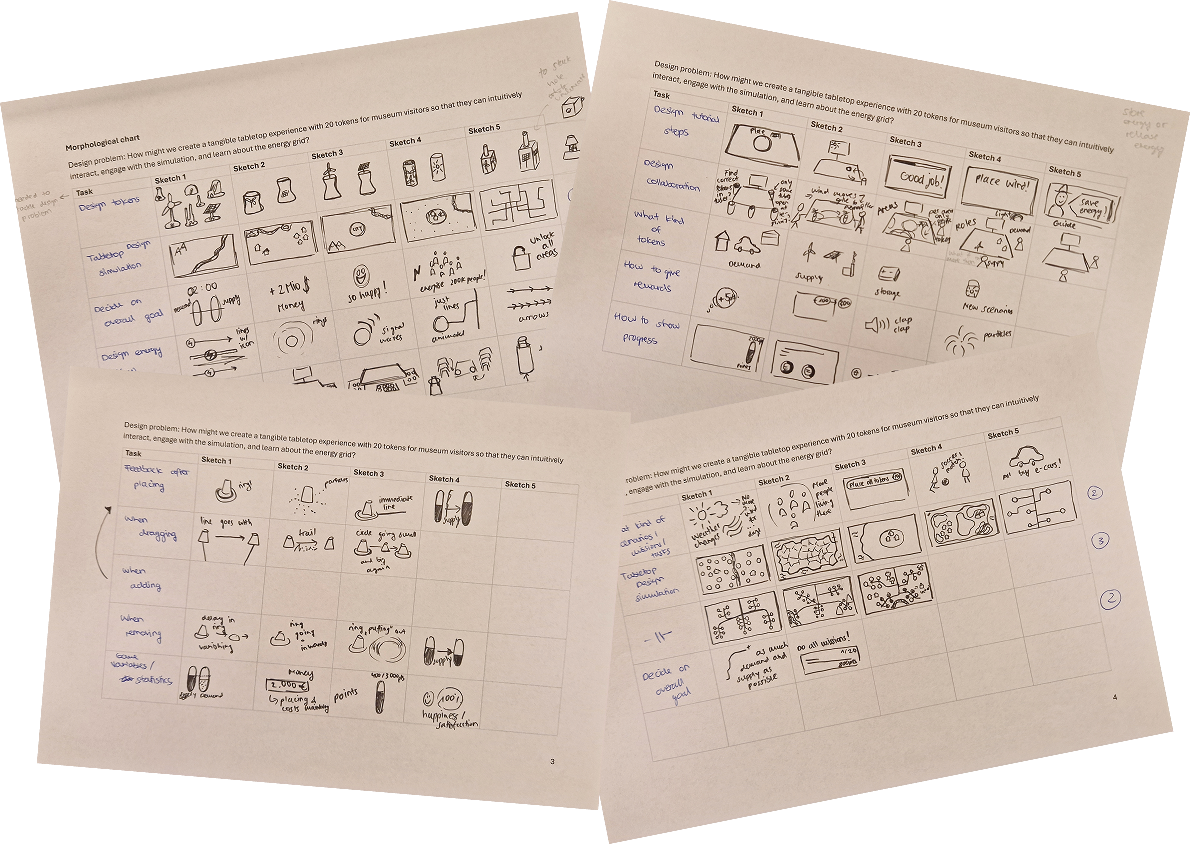
By combining the different solutions, five concepts were created, which were iterated to three final concept outcomes of this ideation method.
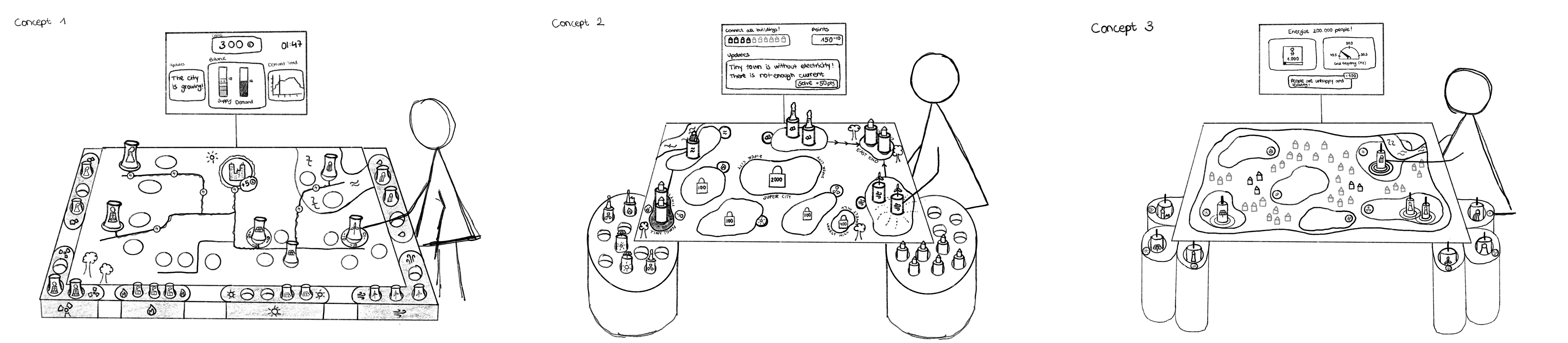
Storyboarding & MoSCoW Requirements Matching
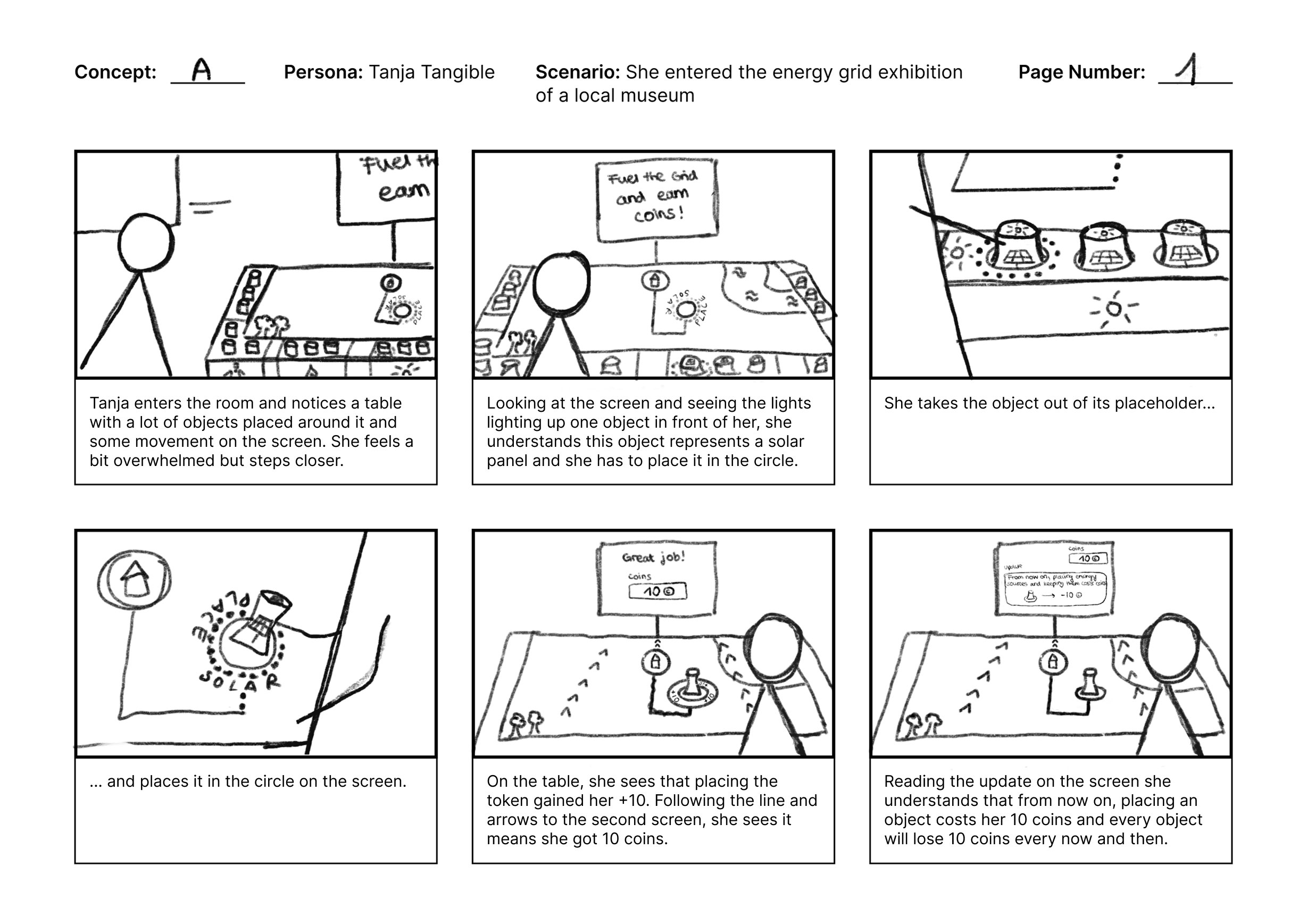
At this stage, storyboards were created based on the three concepts from the morphological chart method. They visualised more in detail how Tanja Tangible would have interacted with them. See below the first page of the storyboard for concept A, which is based on the morphological idea of concept 1.
To measure how well the concepts and storyboards fulfilled the set requirements, a weighted table listed all requirements, their category within the MoSCoW spectrum, their weight, and the storyboards A, B, and C.
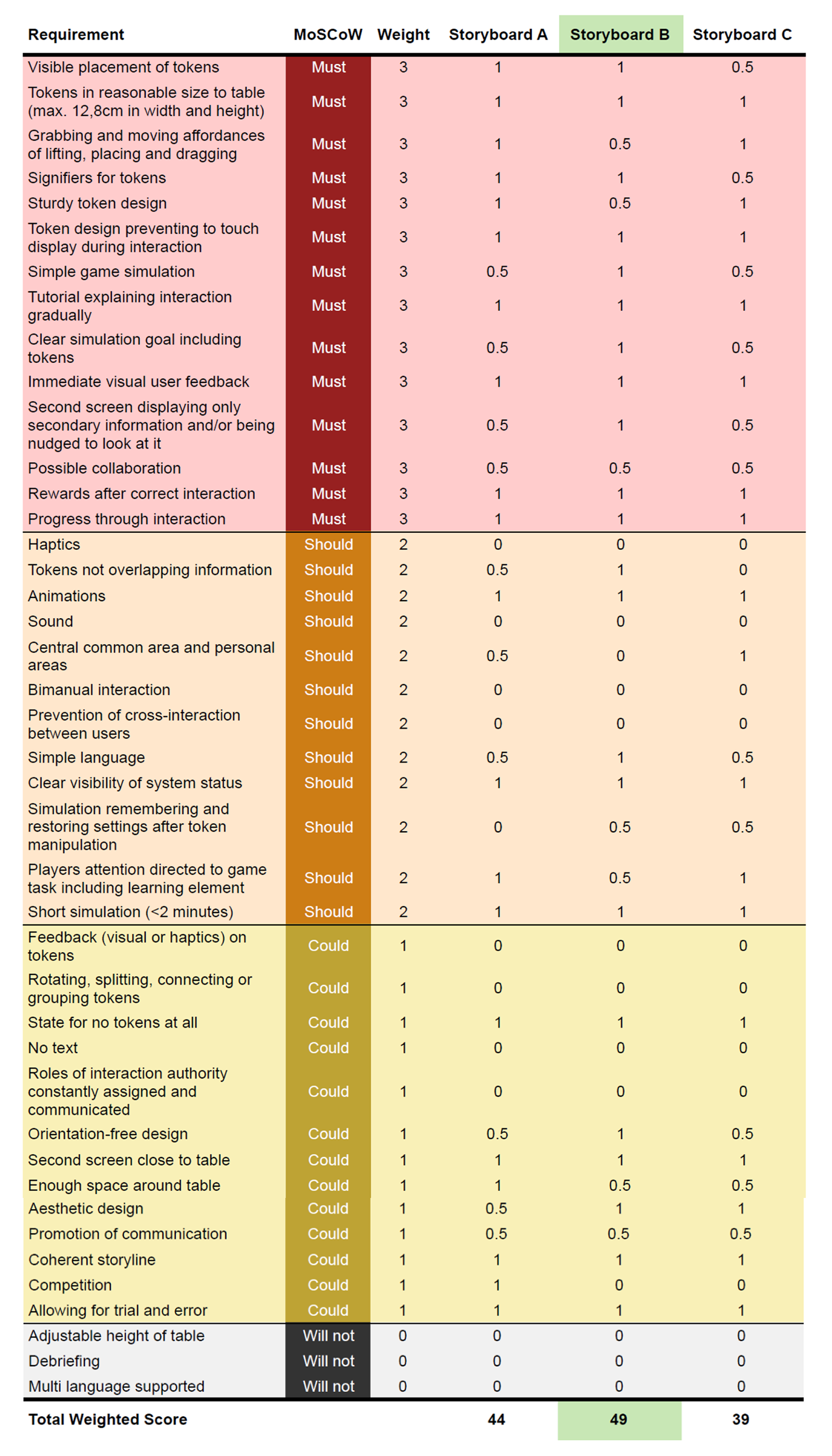
This finally resulted in the selection of the most viable concept for further development (Storyboard B based on Concept 2).
Final Concept
The final concept includes the following features:
- The setup places all tokens in holders around three sides of the tabletop, while the screen is being placed closely on the forth long side
- The tokens are divided in supply and demand tokens
- To encourage lifting and grabbing of the tokens, as well as a sturdy token design, the object that the token represents should be visually represented on the token itself
- To incorporate signifiers, the material, which the suppliers need to generate energy, should be used and repeated as icons
- The interface of the table shows various landmarks that can be unlocked through gained coins
- The second screen is used to display the current system status
- Different scenarios, such as wind changes, stronger or weaker currents or clouds blocking the sun, will affect how well renewable energy sources work and how much fossil fuel is needed
- The general goal of the simulation is to connect all energy demanders (houses) successfully to energy
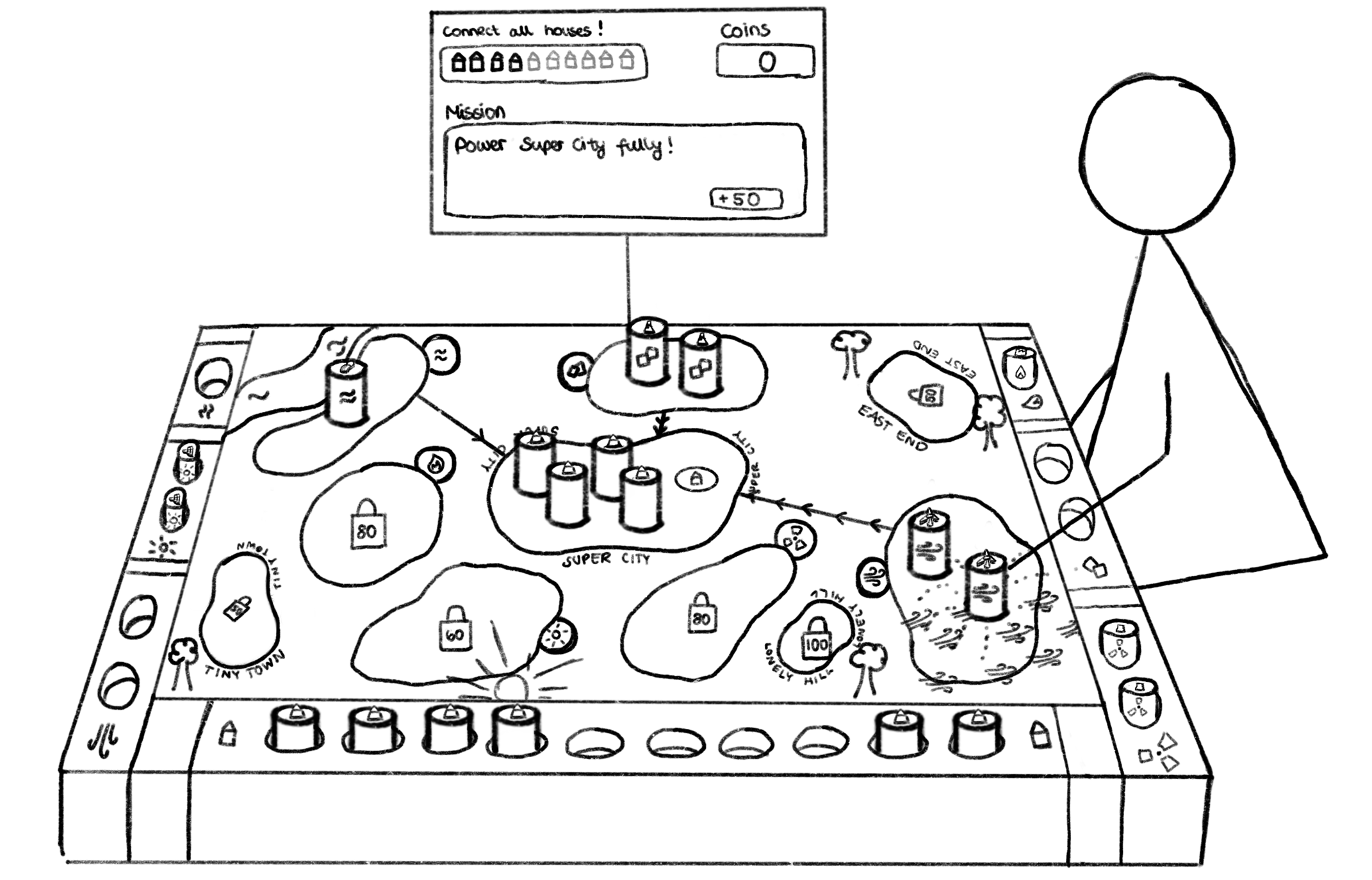
After finalising the concept, the focus was on prototyping the chosen idea to understand how well it works and if it is viable.
Low-Fidelity Prototyping
To create a low-fidelity prototype, I used Procreate to sketch both the table and second screen interfaces. Paper cups, Post-its and markers were used to prototype the tokens and their placements. This enabled me to test the game play and the interaction with the tokens.
Some of the findings that could inform the high-fidelity prototype were for example that there were a few minor logic issues during gameplay. Also, the areas in which tokens could be placed needed to be smaller, but the tokens should be placed closer together to enhance the feeling of grouping and provide a clearer overview despite the number of objects on the table.
Additionally, I was able to check whether active instead of passive tokens would benefit the user experience by simulating adding lights and/or physical buttons to the tokens. However, as neither were categorised as must requirements and neither addition seemed to add enough value to justify adding these functionalities, that idea was disregarded.
High-Fidelity Prototyping
Based on the findings of testing the low-fi prototype, the high-fidelity prototype was supposed to be highly interactive and have a polished look and feel.
Taking into account the game’s features, the time restrictions for building the prototype, and the limitations of common design tools, it was decided to create a Wizard of Oz (WoZ) prototype
UI Design and Interaction
All screens were designed in Figma to be imported into ProtoPie to add high-fidelity (WoZ) interactions. ProtoPie was ideal for this project, as it allows cross-device interaction between different ProtoPie files. In that way, I could have the tabletop and second screen interface react to each other.
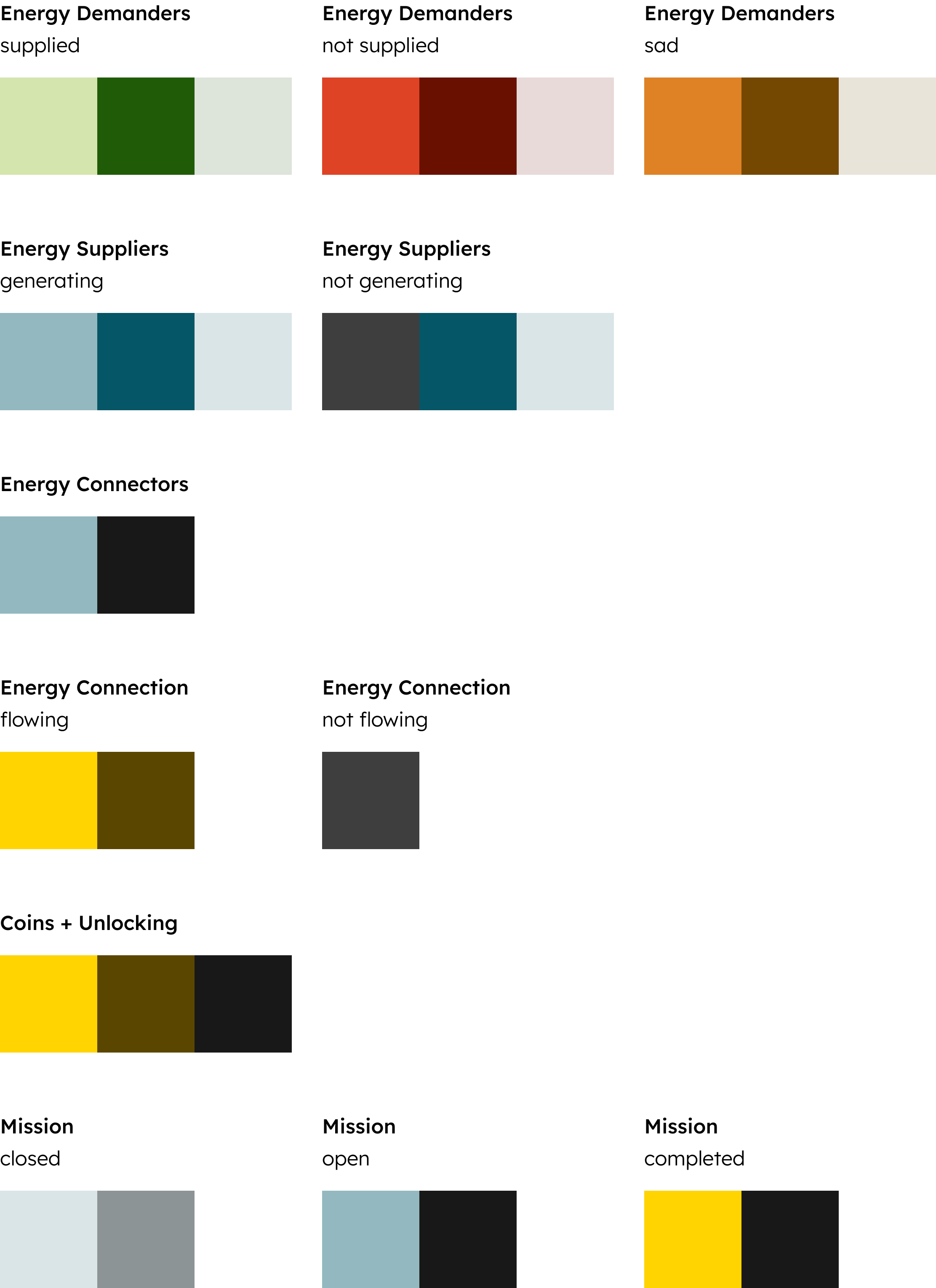
For the UI design, colour coding was used to create a clean and aesthetic design while maintaining an attractive gaming look and feel:
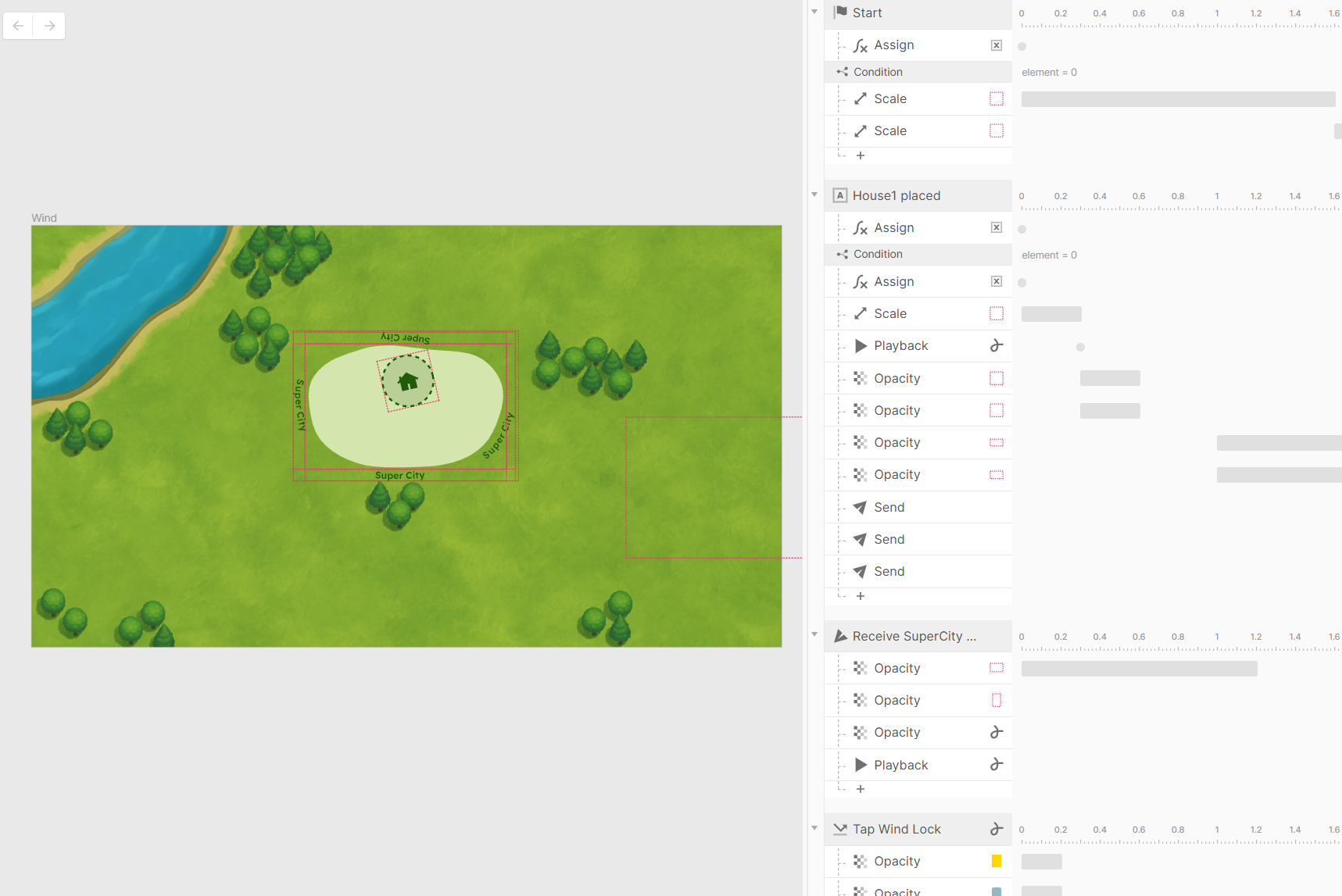
The base of the underlying background image (a grass field with trees and a river in the top left corner as seen below) was prompted in and generated by ChatGPT’s image generator. With Photoshop, trees were cut into the desired position.
After all components, animations and screens were designed in Figma, I could import them into ProtoPie and start adding the high-fidelity interactions. As the tangible tabletop that 100%FAT provided had an underlying Duplex system that could not detect and react to 20 tokens, this interaction was simulated through the ‘Key’ trigger in ProtoPie, which allows for actions to happen as a reaction to a key being pressed on a keyboard. Hence, a Bluetooth keyboard was connected, on which keys could be pressed from a distance to the table without the person interacting with the prototype noticing. Whenever a token was placed on the table, pressing the key ‘A’ by the wizard could trigger the correct reaction.
3D Printing
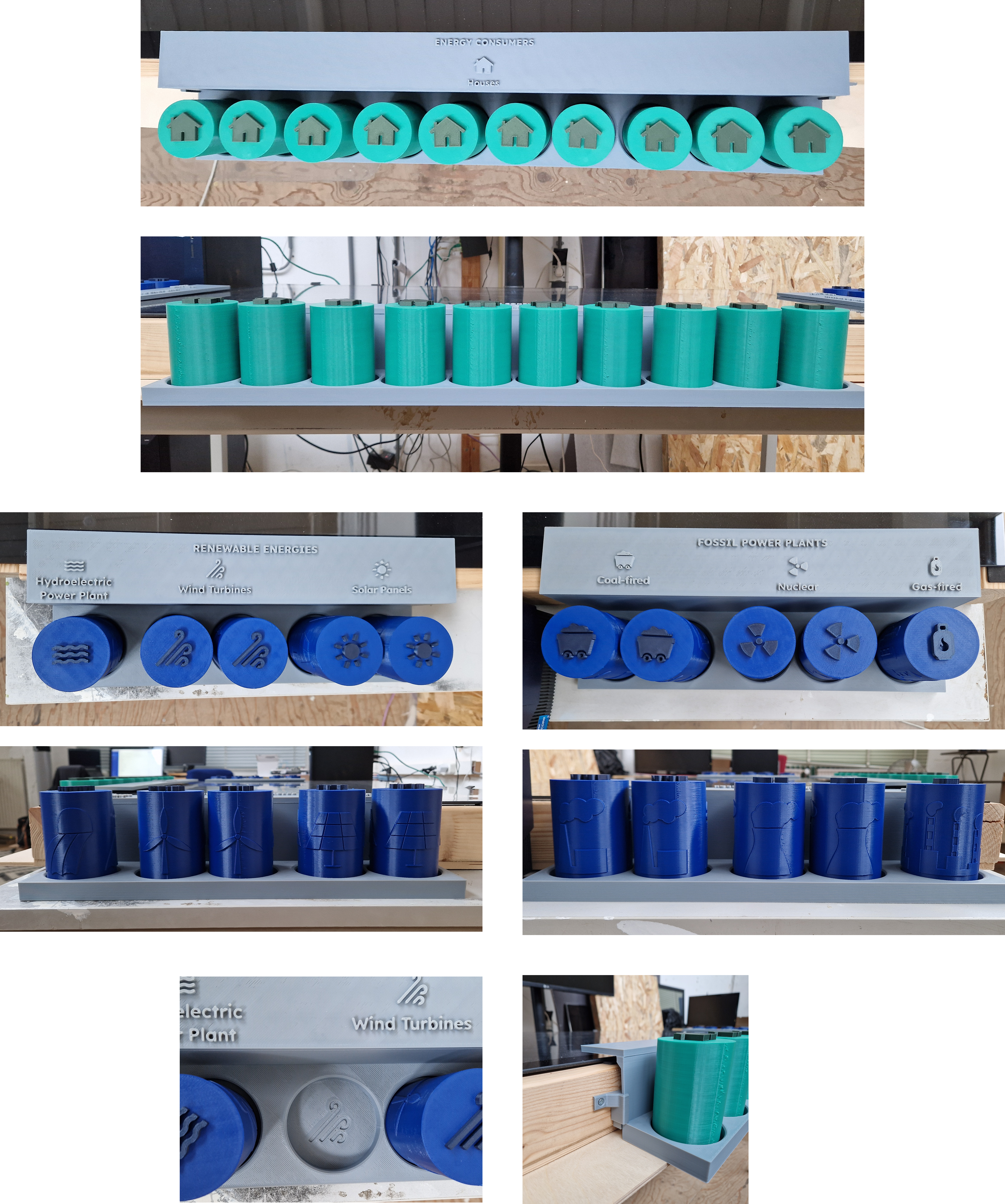
3D modelling and printing was used to design and create the tokens and their placeholders in Autodesk Fusion. With time constraints, no iteration of the tokens was possible.
Final Setup
The two ProtoPie files together with the 3D printed tokens and the underlying gameplay put the final setup in place.
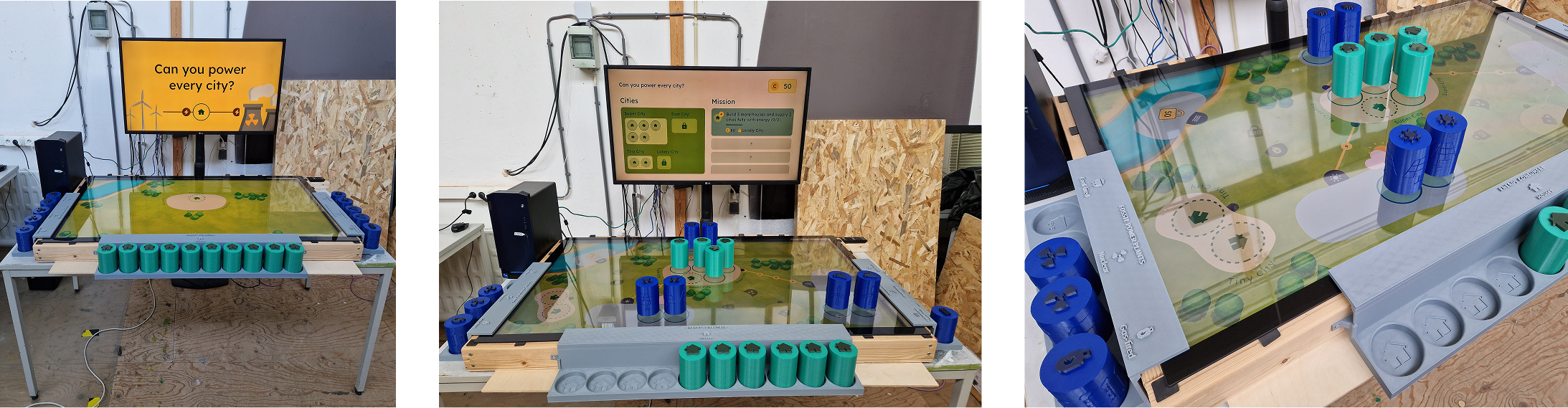
Watch the following video to see the full interaction:
To test whether the installation allowed for a usable and engaging interaction that also supports the defined degree of learning, a usability study was conducted.
Study Design
To conduct the study, the needed information sheets and consent forms, as well as the SUS for measuring usability and the UES-SF for measuring engagement were prepared. Additionally, a general guideline with quiz questions for measuring learning and probing further into usability and engagement was created.
In total, 5 participants were recurited through convenience sampling and by passing a verbal screener. The sessions were scheduled for one hour.
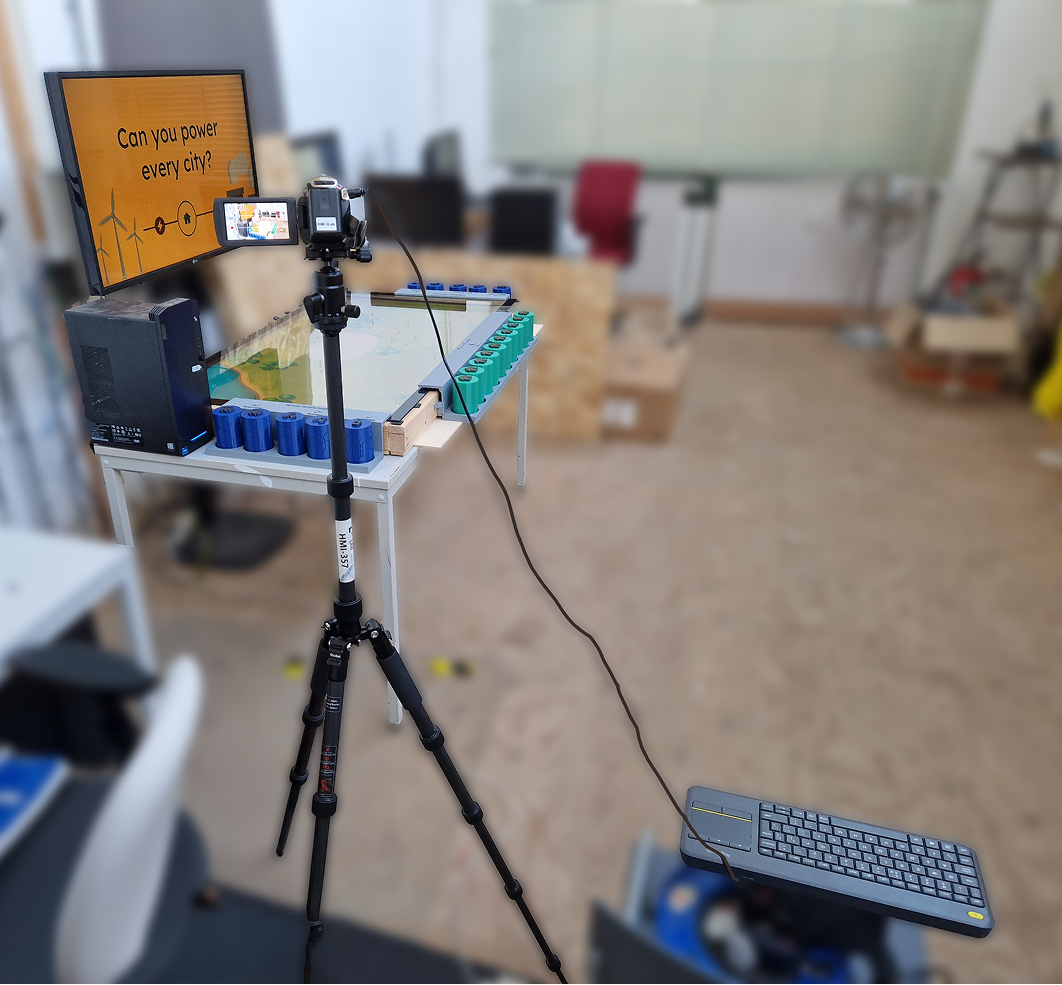
The in-person usability study combined semi-structured pre-interviews, an observation while the participants interacted with the installation, and post-study questionnaires and interviews to measure usability, engagement, and learning. While at all steps audio was being recorded by phone, the observation was also video-recorded by camera to take written notes afterwards. The setup consisted of the camera filming the participant interacting with the installation and me as the human wizard standing next to the Bluetooth keyboard.
Results
After analysing the collected data, the following results were found. In general regarding the observations:
- Visual feedback was liked as well as the overall design
- All participants recommended the prototype
- 14 learned actions occured while playing
- 26 Moments of confusion meant 18 hints by me where needed
Regarding the tokens, the following feedback was received:
- Stronger grabbing affordance needed
- No issues with performing movement types
- Bimanual interaction was used
Most importantly, participants did not feel overwhlemed by the amount of tokens due to the tokens being ...

Usability
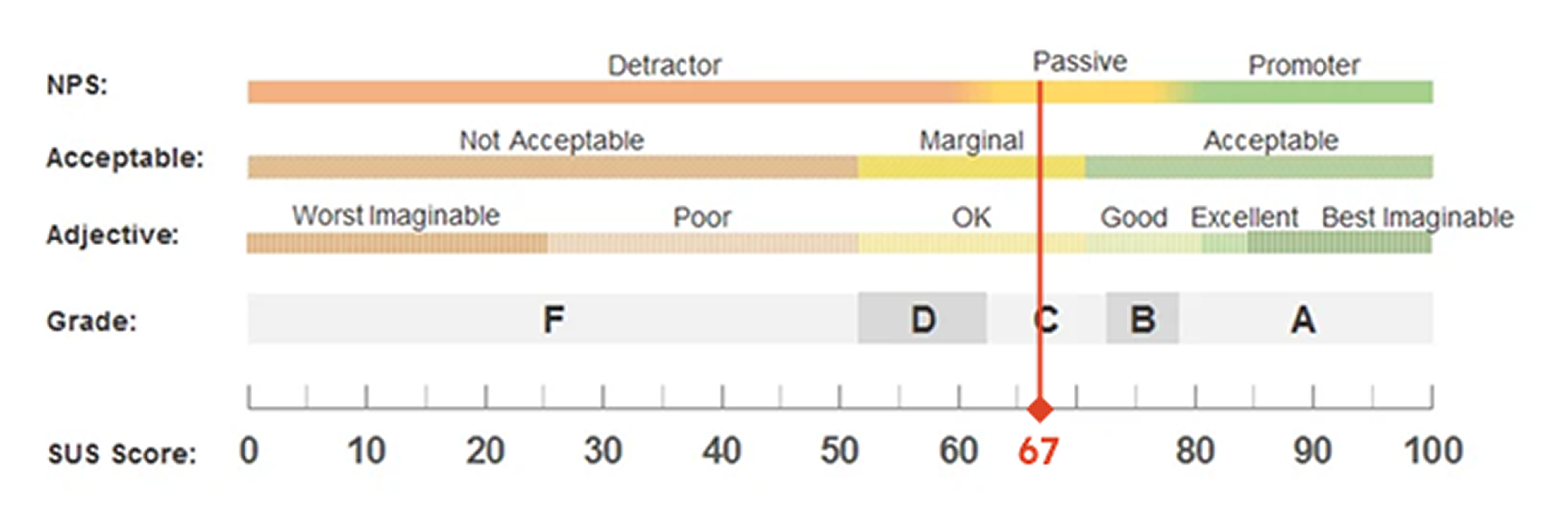
With a SUS score of 67, the usability can be described as OK. This can be explained by the moments of confusion during the interaction as well as item 1 (‘I think that I would like to use this system frequently’) being ranked on average 2.4 points below the ideal. By improving clarity and hints of the desgign, the exploration of the system should support overcoming these issues and help improve the usability.
Engagement
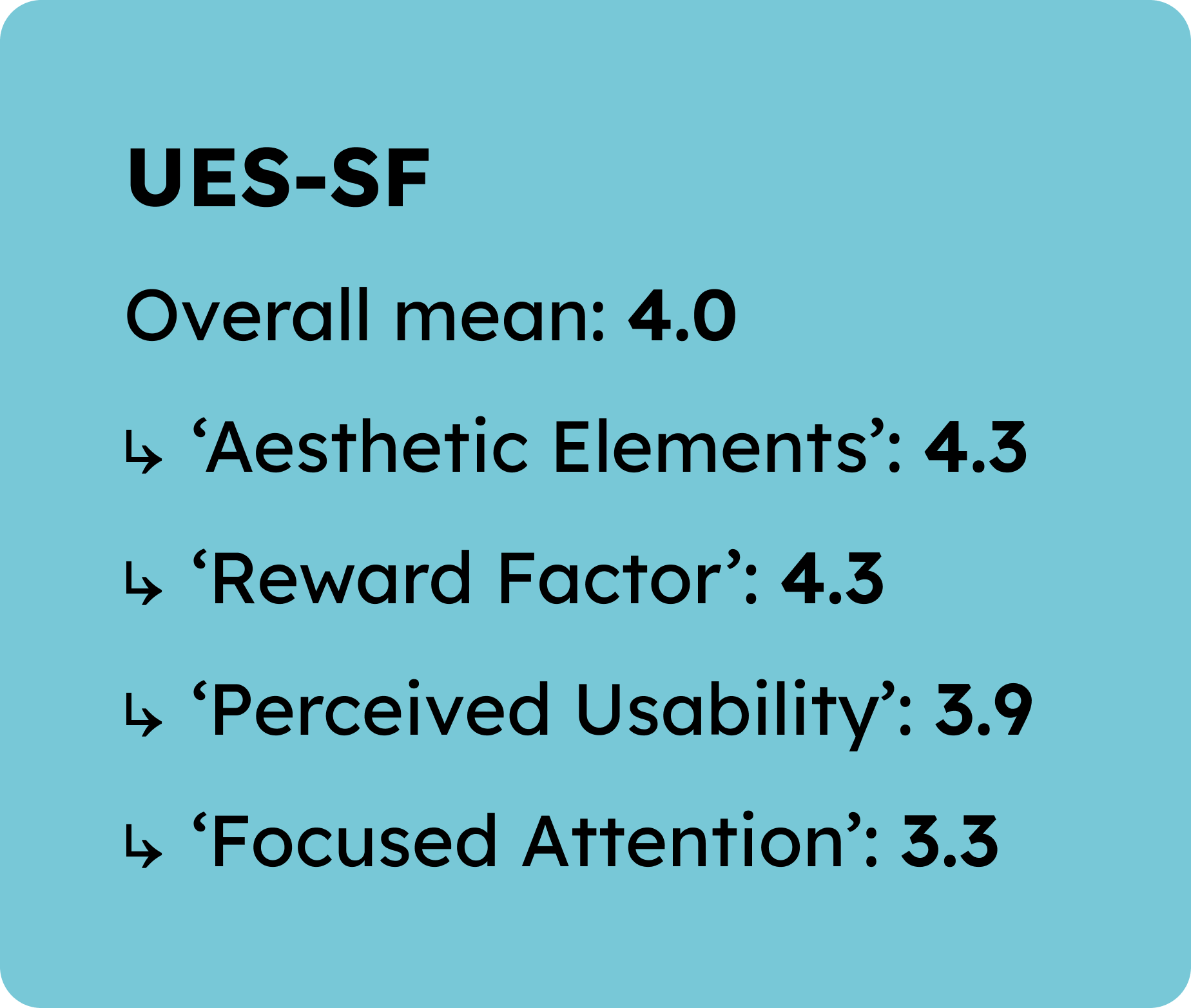
The results of the UES-SF scored above neutral with its overall mean of 4.0, which shows that the system was generally engaging. The different category scores help to understand what parts of the experience influenced this result.
Learning
For the learning effect, it can be said that the smaller the participant's pre-knowledge was, the bigger the learning effect turned out to be. In general, it could not improve the interest or motivation in the topic of the enrgy grid for everyone. This could be because the gameplay was simple and not clearly connected to real-world concepts, which was intentional in this design.
Summary
Some of the limitations and learnings of this research are that the museum context strongly influenced the design decisions, and that collaboration between users was not tested or focused on even though that is one of the major benefits of tangible tabletops. Also, the Co-Design session might have produced more creative results if it had been done in a group setting rather than individually, and with more time, the 3D printed tokens could have been iterated.
Nevertheless, this research helps to understand how a large amount of tokens can be introduced to a tangible tabletop setting, when usability, engagement and learning should be highlighted. In general, usability heuristics and game design elements should be applied, while attention should get directed to the learning goal. An aesthetic interface with high learnability and a simplified gameplay with limited functionality also reduces the cognitive load that is introduced through the amount of tokens. Additionally, tokens should be introduced gradually with clear affordances and they should be integrated into the game’s goals with visible groupings and placements.
Acknowledgments
I especially want to thank Lieven Maes and my advisor Sven Deinum from 100%FAT for the opportunity to work on this project, as well as all other colleagues from 100%FAT and participants of the studies.
Next project:
Skydda